by Nikki Rajala | Apr 4, 2026 | Voyageur
Imagine traveling hundreds of miles from winding rivers and rapids to vast inland lakes, carrying everything you need in a vessel made entirely from bark, roots and wood — a birch bark canoe. They were genius — objects deceptively simple, yet perfectly engineered by...

by Nikki Rajala | Mar 12, 2026 | Voyageur
Once, a prime beaver pelt was money, the standard currency for the fur trade. According to the Canadian Encyclopedia: “Soon after its founding in 1670, the Hudson’s Bay Company found it necessary to devise a unit of value that would accommodate Aboriginal...

by Nikki Rajala | Feb 7, 2026 | Voyageur
Tom H. Holloway, a research volunteer at the Fort Vancouver National Historic Site, sent me this piece. He’d been asked how common Hudson’s Bay blankets with a multicolored stripe (or candy stripe) were in the West Coast fur trade. To answer it, he did...
by Nikki Rajala | Dec 9, 2025 | Voyageur
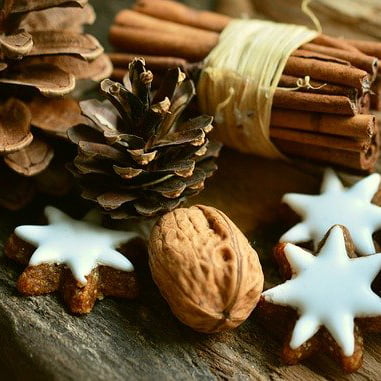
Q: How did voyageurs celebrate Christmas? A: Not like we do. Our favorite holiday traditions hadn’t been invented yet, so no Ho-Ho-Hos, no Santa, no tree or decorations, no cookies or concerts, no Nutcracker or Christmas Carol performances, no Grinch or Charlie...
by Nikki Rajala | Nov 13, 2025 | Voyageur
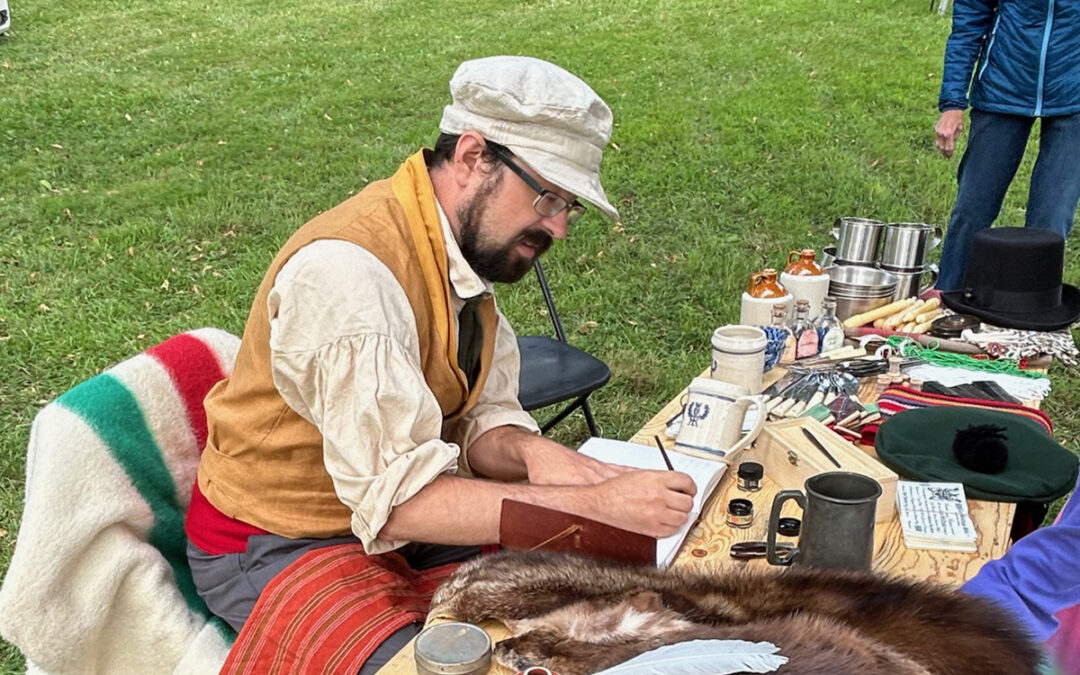
I met Brian Hardy at the Huot Chautauqua where he was portraying a fur trader. Interestingly, he gets paid to dress up in historical costumes — he’s the outreach coordinator for the Pembina State Museum, a part of the State Historical Society of North Dakota, in...
by Nikki Rajala | Nov 6, 2025 | Voyageur
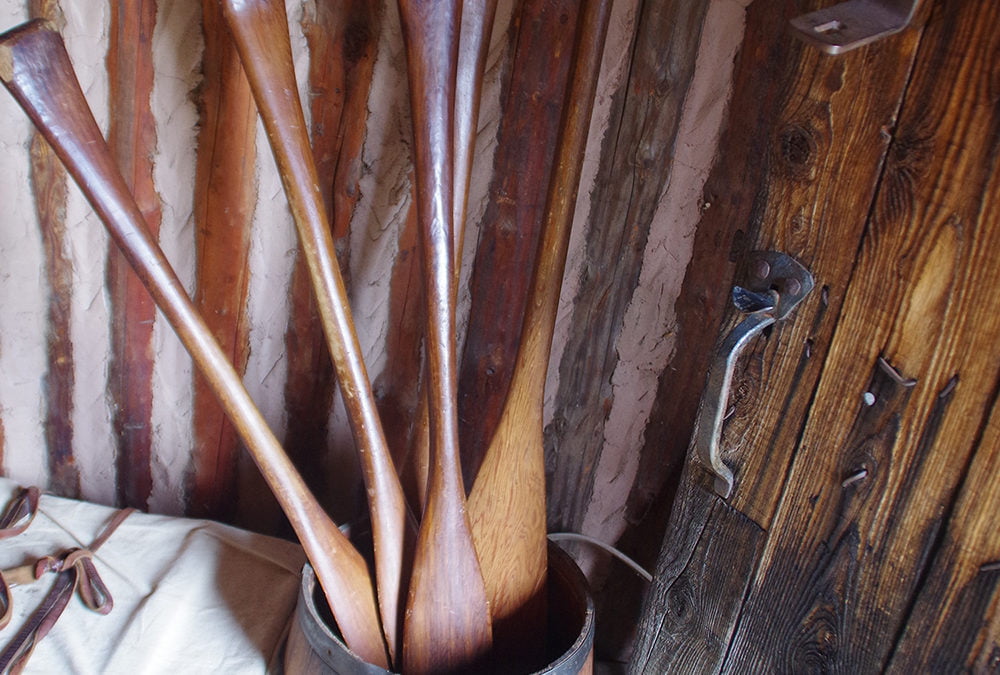
A few years ago at a presentation, someone asked me: Why were French-Canadian voyageurs’ paddles red? We considered a few possibilities: Was it to show them how deep they should paddle? Not really — within a few hours of paddling, even newbie voyageurs would...