by Nikki Rajala | Aug 31, 2026 | Voyageur
When my sisters visited Canada a few years ago, they presented me with this gift card from the flagship Hudson’s Bay Company store. HBC was founded in 1670, first serving the fur trade and later the public with fascinating department stores I loved the trademark...
by Nikki Rajala | Aug 1, 2026 | Voyageur
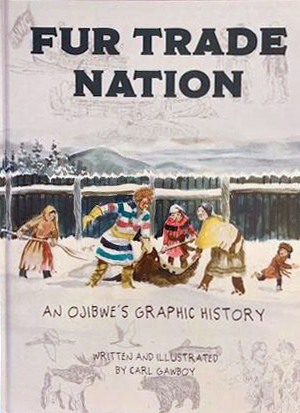
This book came out a year ago. It’s taken me more than a year to consolidate my thoughts into a post. While I requested permission to reprint images and quotes, I never heard back, so the only artistry I can show are the covers of Gawboy’s work. “Fur Trade...

by Nikki Rajala | Jul 2, 2026 | Voyageur
In the last days of June 1793, John Macdonell and two partners shifted cargo out of their canoe and moved their belongings into an express canoe, with more paddlers so as to travel as fast as possible to the rendezvous. Leaving the remaining crew to transport...

by Nikki Rajala | Jun 12, 2026 | Voyageur
John Macdonell’s account began when he signed his contract on May 10, 1793, with his first-ever canoe brigade ( Part 1). After a month upstream on the Ottawa and Mattawa Rivers (Part 2 and Part 3) and a few days’ rest, this section recounts how his brigade...

by Nikki Rajala | Jun 5, 2026 | Featured
John Macdonnell’s brigade is working their way upstream since May 25, 1793. It takes them about 3 weeks to reach the Mattawa River, a tributary off the Ottawa River, which they call the Grand River. Eventually they reach the height-of-land, and, with a big...